
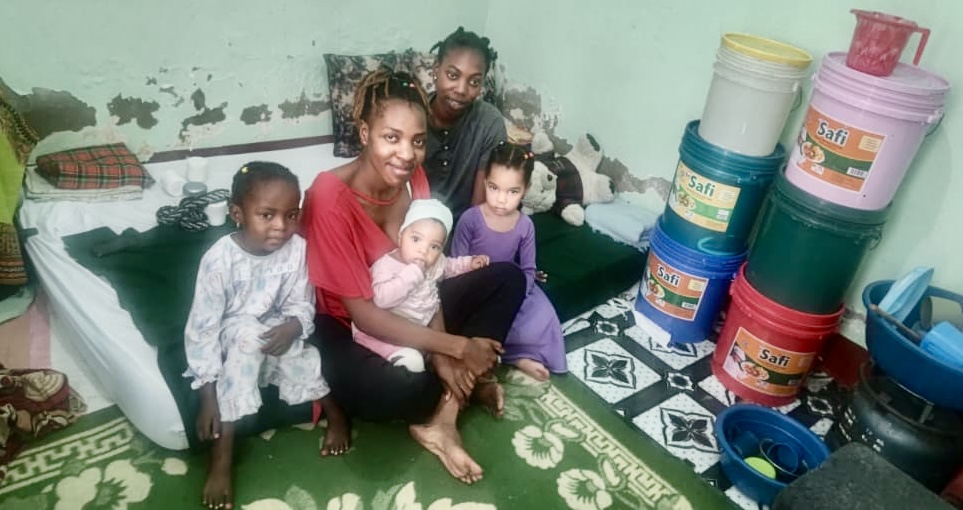
(Rebecca Mama Gabriella)
REBECCA’S STORY (Mama Gabriella)
Rebecca is 29 years old. She is caring for four children in one small room with a mattress on the floor, buckets for her food and a basket with pots and pans. She is the sole support for her own two children aged 3 years (Gabriella) and Georgia who is 7 months, and her 5 year old niece, and her younger sister who depends on her for support to continue in school.
Rebecca’s niece came to stay with her after her brother’s wife abandoned her at a very young age and the baby was being taken care of by her grandmother (Rebecca’s mother). But Rebecca’s mother later became seriously ill with diabetes, Rebecca’s father suffers from chronic liver disease. He is often weak and unable to work.
Since Rebecca is the oldest person in the family, she made the decision to take the child and raise her niece herself. Despite her own struggles, Rebecca could not turn away from a child in need.
In 2020, Rebecca met a man who promised marriage and a future together. He convinced her to leave Mwanza and move to Arusha, assuring her that he was single and ready to live with her. However, their life together was unstable. The man would stay for a week or two weeks, then leave, claiming he was traveling for work and returning weeks later. The unknown thing to Rebecca was that the man was already married with another family.
After the birth of their first child, Rebecca became pregnant again when the first child was only a year and a half old. When she informed the man about the pregnancy, his attitude changed completely. He became angry, accused her of trying to force him into a family, and asked her to do abortion. In the midst of that conflict the man revealed the truth that he had a wife and another family and told Rebecca to forget him entirely. At two months pregnant, Rebecca was suddenly abandoned and left alone with the kids and her young sister. It has been one year and two months now and she has never seen or heard from him again.
Life quickly became unbearable for the little family. Unable to afford rent and food, Rebecca and her children were repeatedly moved out from rented rooms. At times landlords would take all her belongings, including her bed to cover unpaid rents. To survive, Rebecca worked washing clothes in people’s homes, but during pregnancy she developed severe anemia, a condition that continues to affect her even after childbirth. She is no longer physically able to do heavy work, making it extremely difficult to earn an income that would help her to provide for her family and pay rent.
Due to illness and poor nutrition, Rebecca struggles to produce enough breast milk for her baby and at times, no milk comes at all. Currently, the entire family sleeps on one small mattress in a single room. The room she lives in now was paid for by a good Samaritan who met her crying on the street after being moved again from another room by the landlords because of unpaid rents. That support covered only one month of rent for December.
Rebecca learned about the MAP Program through other women at the market. For almost a month, she wanted to come seek help but could not afford even the bus fare. When she finally managed to get transport, she said she came with one simple hope-To try.
So far, Rebecca has received emergency support for food, nutritional porridge flour, and baby formula. During the interview, she shared her pain and ending by saying, “Huu ndio mzigo wa maisha niliyonayo” – “This is the burden of life I am carrying.”
Although Rebecca is currently in urgent need of rent support for her next payment, she will also be enrolled in counselling sessions and Bible studies. Through this support, she will have space to heal emotionally and spiritually, learning that God is able to carry her burdens and restore her hope and give her a better future. As her strength is renewed, Rebecca will be guided to reflect on sustainable options for rebuilding her life and securing a livelihood for her family.
Rebecca’s story reflects the harsh realities faced by many vulnerable women in Africa like abandonment, hidden poverty, and the silent strength of mothers who continue to care for others even when they themselves are breaking.