
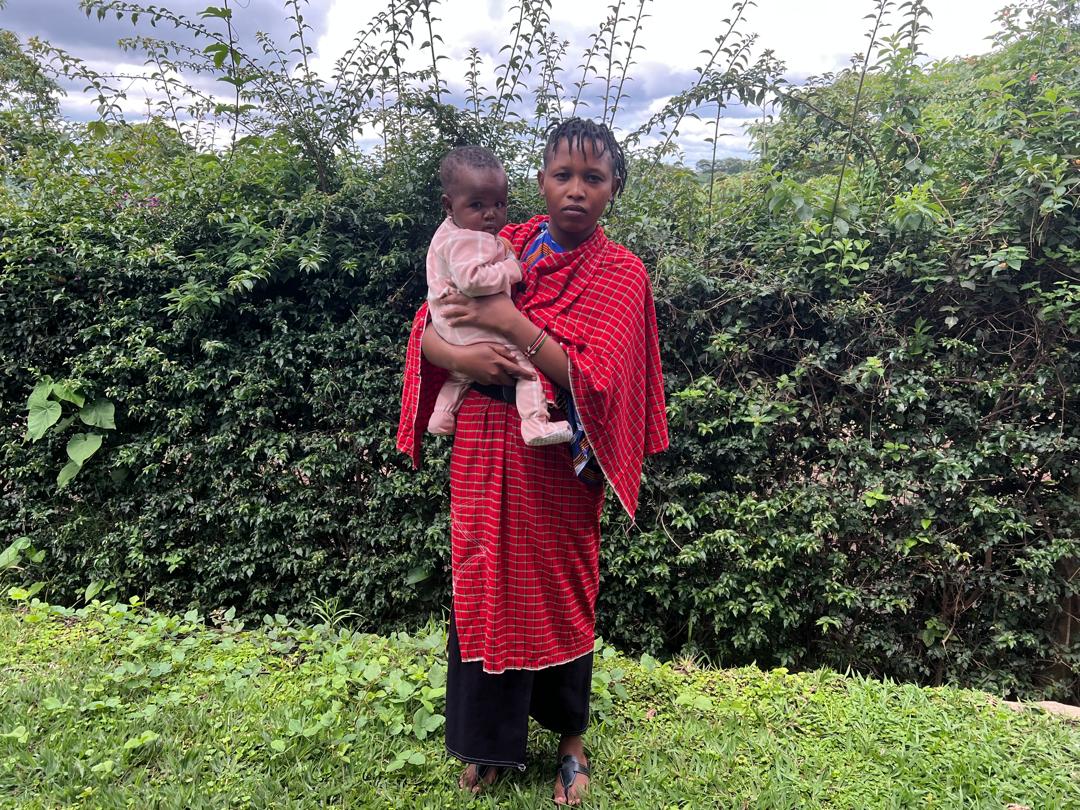
Rahel
Born into a Maasai family as one of seven children .Rahel is 21s years old and the mother of a nine-month-old baby girl named Charity. After losing her father at the age of six, Rahel and her seven siblings were raised by their mother under challenging circumstances in a poor, remote Maasai village.
Despite their life challenges, Rahel pursued her education and completed secondary school (Form Four), an achievement that remains uncommon for many Maasai girls, who are often denied the opportunity to go to school. With support from her brother, she took a further step toward independence by enrolling in a tour guiding college, hoping to build a better future for herself and her family.
However, her journey was interrupted when she became pregnant before completing her studies. Forced to leave college, Rahel returned to her village and began raising her daughter alone after the child’s father disappeared and cut off all communication. To survive, she worked in the fields, providing for both herself and her baby.
Life became even more difficult when her brother, disappointed by her pregnancy, arranged for her to be married off to a man she did not know or choose. With her daughter still an infant and her own future uncertain, Rahel refused the forced marriage. Fearing she would lose control over her life entirely, she made the difficult decision to run away.
With the help of a compassionate community member, Rahel was connected to NEEMA VILLAGE. She is now getting safe shelter at the MAP Apartments, where she and her daughter now have access to basic needs and a secure environment.
Today, Rahel has a space to dream again and rebuild her life. She participates in group therapy and counseling sessions to heal from her experiences, while also gaining practical skills through sewing and computer classes. These opportunities are helping her regain confidence and independence.
Rahel’s story is not unique, her story reflects the reality faced by many young Maasai girls in Tanzania, where determination and hope often collide with deep-rooted cultural pressures. Across Maasai communities, many girls see their dreams cut short by early pregnancies and forced marriages, often before they have the chance to complete their education or choose their own path. Her journey highlights both the challenges these girls face and the importance of support systems like NEEMA VILLAGE that empower them to reclaim their futures.