
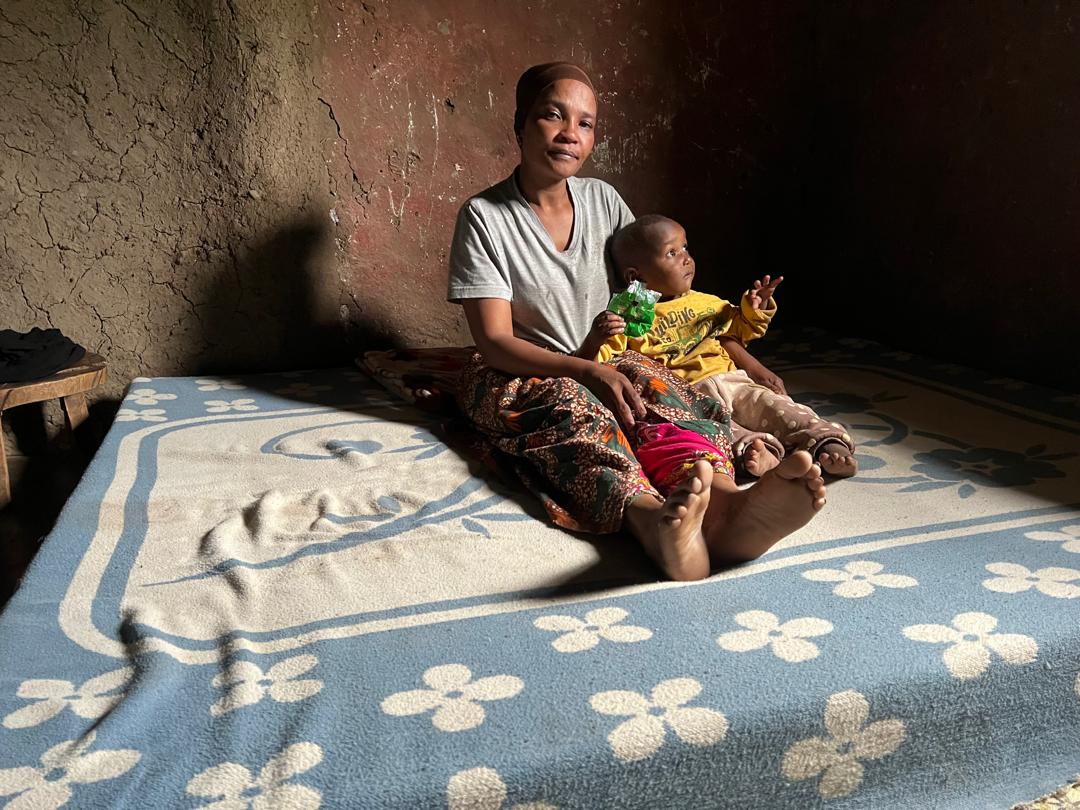
Pendo
Pendo was born in a region called Singida, her parents are old but still alive. She has two siblings. At 43 years old, Pendo is a mother of six children.
She was married at church and was living happily with her husband. She and her husband built a home and began raising their children. Then everything changed.
After her husband took a mistress, he became emotionally and physically distant. Later without warning or explanation, he left Pendo and their four children. At the time, she was two months pregnant with their fifth child. He went on to build a new house for another woman, expecting Upendo to leave the home they had built together.
But Upendo could not leave because she had no job. No savings and nowhere else to go, so she stayed for her children.
Her husband would return sometime in anger and beat her and demand she leave. He was telling her “I have already left you. What are you still waiting for?” Pendo will tell him that “I am here because of the children,” the husband will tell her “You didn’t come with children. Leave my children and go.” But Pendo could not abandon her children.
The violence worsened. There were times she was beaten until she fainted and woke up in the hospital, her husband nowhere to be found. Sometimes after beating her the police will catch him, but they will ask to take it home and solve it like a family but he did not change. The final beating nearly killed her. He strangled her, determined to kill her, fortunately the cousin appeared and saved her from him. But from the repeated beatings, she lost sight in one eye. It was then that her parents pleaded with her to leave.
Her mother told her “You say you are staying for your children,“But what will happen when they grow up and we show them your grave? Leave now so you can stay alive for them.”
In 2021, with a broken heart, Pendo made the painful decision to leave her children in the care of her mother and travel to Arusha to stay with her aunt. She hoped to find work and rebuild her life so she could one day provide for her children.
But hardships kept following her. One day, her aunt was involved in a serious accident while returning home from church. She suffered a spinal cord injury and later passed away. After her death, Upendo’s uncles told her she could no longer stay because the one who had been supporting her was gone, and they planned to rent out the house.
Homeless again, she found work as a housekeeper, only to be kicked out because she attended church. A pastor later gave her temporary shelter while she worked in a food vending business, but when the pastor’s family needed to travel, she had to leave once more.
Eventually, she found work in a factory and rented a small, muddy house with holes in the walls. She slept on a mat on the floor with her daughter. One Sunday at church, she shared her story with a woman who was moved with compassion and bought her a bed and mattress.
In 2023, she met another man. She said “When this one came, I thought because he was from another tribe he would treat me well. I was relieved. I thought I had found someone who would support me.”
She became pregnant. But when she was five months along, he too changed and disappeared. She could not reach him. She did not even know where to find him.
Because of her pregnancy, she was told to leave her factory job. With no income and another child on the way, she sold everything in her house to survive. When there was nothing left to sell, she began begging for food—walking from house to house with her daughter.
Desperate and exhausted, she asked people where she could leave her children. She even searched for someone who might want to buy her unborn baby, she was only looking for someone who would support her during pregnancy and buy the baby when the baby.
But in her darkest moment, she met a social worker who loved God and chose to stand beside her. The social worker counselled her, provided food, and paid her rent until she gave birth. When the baby was one month old, that support ended, and Upendo began washing people’s clothes to feed her children.
While working in one home, she heard about Neema Village. One Sunday, she came to church and bravely shared her story. When we visited her, we found her living in a very old mud house with holes in the walls, sleeping on the floor with her two youngest children.
Her other children remain in the village, where life is still a struggle. Their grandmother is elderly and can no longer fully provide for them. Their grandfather is seriously ill with diabetes. One sibling is unemployed, and her younger sister works as a housekeeper and cannot offer much support.
Today, Pendo is part of our MAP Program. She receives monthly food support, attends group counselling and Bible study, and is learning sewing skills. For the first time in many years, she is not walking alone.
When asked about her future, she speaks with quiet determination. She dreams of starting a small grocery store so she can become independent and support all of her children. Pendo’s story is not only one of suffering, but it is one of hope and determination.